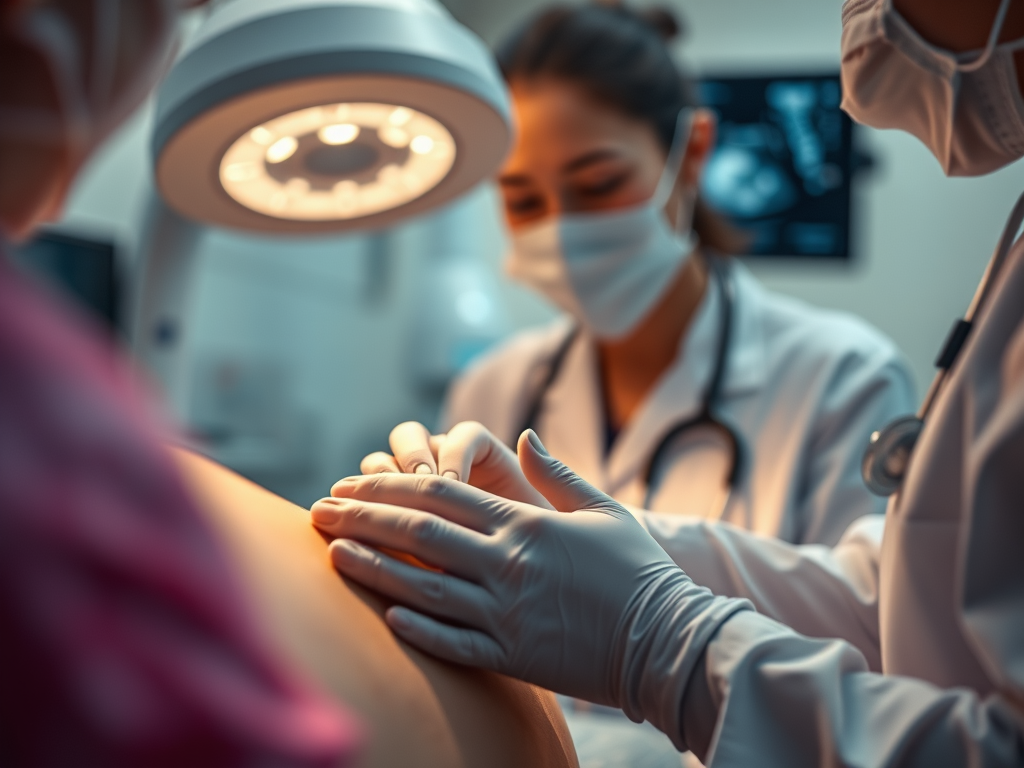
Today was finally the last pre-op procedure. Since my first scan that popped up abnormal, I have had 3 different mammograms, ultrasound, a biopsy, Lydex baseline testing, a surgical consult, genetic testing, an MRI with IV, pre-op blood panels, and today, the seed implant. It feels like such a whirl wind. I must say that I thought childbirth had killed my modesty, but this all certainly ups that game.
So what is the seed? Here’s the scoop!
- A tiny radioactive seed (smaller than a grain of rice) is implanted into or near the tumor a few days (sometimes up to a week) before surgery.
- This seed gives off a small amount of radiation — just enough that the surgeon can use a special detector during surgery to locate it very precisely.
- During the lumpectomy, the surgeon follows the “beep” or signal from the detector straight to the seed — and, therefore, straight to the tumor area — making it easier to remove the cancer cleanly while saving as much healthy tissue as possible.
Why is it done? It helps the surgeon pinpoint exactly where the tumor is with better accuracy, even if the lump itself can easily be felt by hand. Without the seed, many patients would have to go through wire localization, where a thin wire is inserted into the breast to mark the tumor on the day of surgery. Wires can be uncomfortable and stressful. Since the surgeon can be more targeted, they can often remove the tumor with a smaller incision and preserve more of the breast’s original appearance.
My first question was around it’s safety. The amount of radiation is tiny and localized, and the seed is removed along with the tumor during surgery. It doesn’t stay in the body. The radiation from the seed is very low — it’s not dangerous to you or people around you while it’s in. After the lumpectomy, the seed is handled by specialists following strict medical safety procedures.
As far as the procedure, this is done by a radiologist and is guided by ultrasound. You will lay on a table with a wedge under your back on the treatment side, placing your arm behind your head. They number the skin and internal breast area with local anesthesia, about 2-3 quick pricks that sting a bit. The ultrasound technician provides the radiologist a clear view of the tumor and my prior titanium marker, then the radiologist inserts a thin needle into the tumor and drops the seed right into or next to the tumor just beside the original biopsy marker. I jokingly call these my internal piercings. After placement, you get to go for another mammogram (yay!) to make sure it was placed properly. The overall procedure takes around thirty minutes. By this point, I have been poked and squeezed more than I ever thought I would experience in my life. My body is starting to feel like it’s not even mine somedays.
I am a bit tender now. It’s not as bad as the original biopsy, but I did require some Tylenol and ice for a bit. Before I crash for the night, I am trying not to gag on my third protein shake of the day. I know the protein is key for healing, but I am currently getting over 110g of protein daily. My recommended intake based on my weight it 67g. Needless to say, I am full. Very full. BUT, we are finally ready for the big event next week.
Leave a Reply